
PIGNATELLI & ASSOCIATES, P.C.
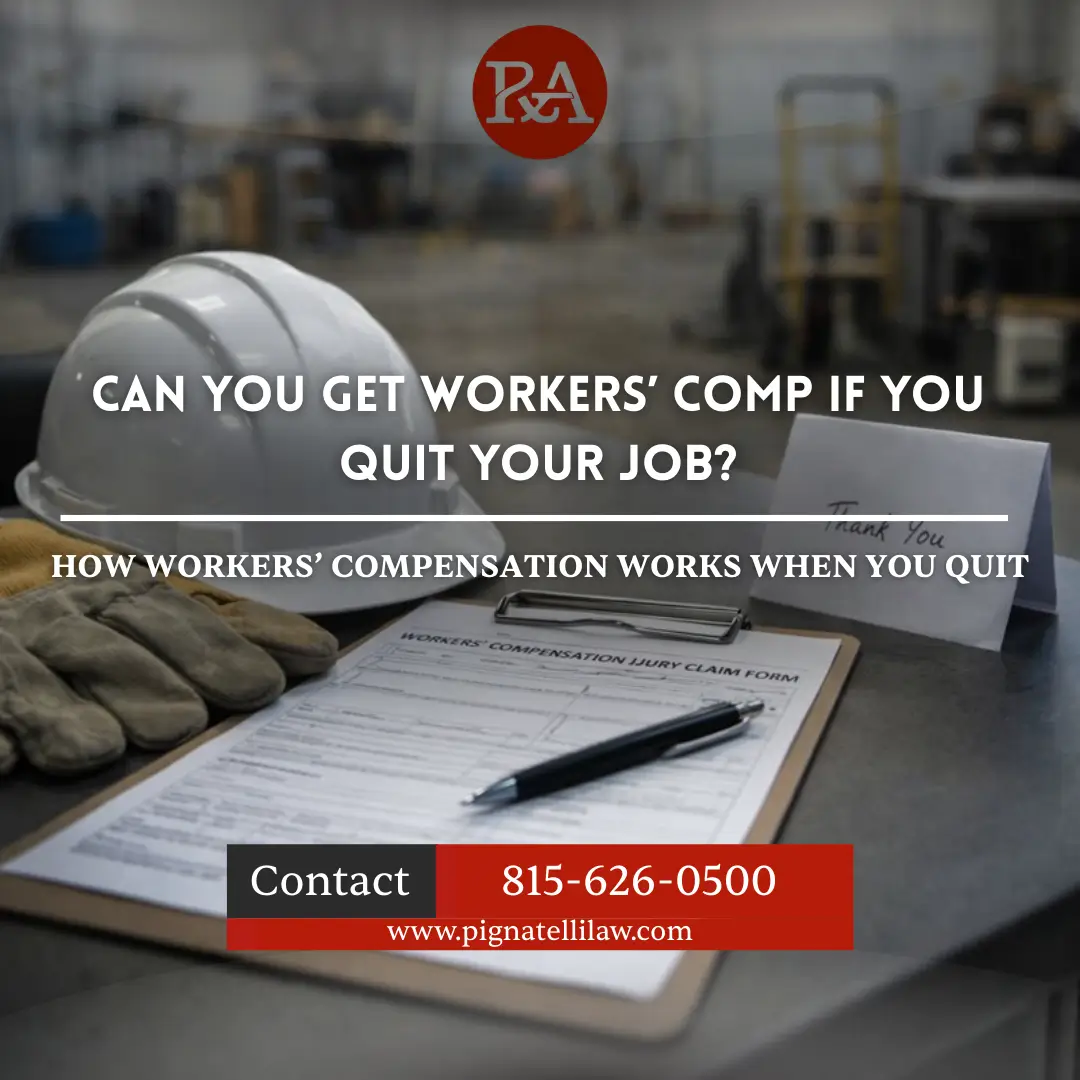
Can You Get Workers’ Comp If You Quit Your Job?
Related Posts




Tags

January 7, 2026
\

Pignatelli, P.C
If you quit your job after a work injury, you may still qualify for workers’ compensation benefits. The key issue is whether the injury happened while you were employed. When the injury is documented and reported correctly, the right to medical treatment and other benefits does not end simply because you leave the job.
Some benefits may change depending on the reason for your departure and whether your work restrictions continue to be in effect. At Pignatelli & Associates, we focus on how the law applies to your situation so you understand what continues and what may be affected.
AWARD-WINNING TEAM
Your Pain Deserves Justice.
We'll Fight Until You Get It.
- 100% Free Consultation
- No Win, No Fee Guarantee
- 24/7 Available
5/5
500+ successful cases
You Don't Pay Unless We Win!
Connect With Us Today For A Free Consultation.
$105,000,000+
Recovered For Our Clients
Get Your Free Case Evaluation
Call Intake Form – Pignatelli & Associates
Client Intake, Existing Case, and Call Routing Form
"*" indicates required fields
How Workers’ Compensation Works When You Quit
Workers’ compensation benefits follow the injury, not your employment status. If the injury happened while you were working and you reported it properly, the claim remains active even after you leave the job. Quitting does not erase the medical records, the accident report, or the right to treatment.
Workers’ compensation laws focus on whether the injury is work-related. When that is documented, medical benefits continue because they are tied to the injury itself. Permanent disability benefits also remain available, since they are based on long-term restrictions confirmed by your doctor.
The part that may change is wage replacement. These benefits depend on whether your work restrictions prevent you from earning income. If you quit for reasons unrelated to the injury, the insurer may question whether your loss of wages is connected to the medical condition. This is why the reason for leaving the job often matters.
Pignatelli & Associates evaluates these details to help you understand which benefits remain secure and which ones may be affected after you leave an employer.
Which Workers’ Comp Benefits Are Still Available After You Quit?
Most workers’ compensation benefits remain available after you quit if the injury is work-related and properly documented. These benefits continue because the law focuses on the injury, not on whether you remain employed.
Medical Treatment
Medical benefits continue because treatment is tied to the work injury itself. Approved care, such as appointments, testing, therapy, medication, and surgery, remains covered as long as it is medically necessary.
Permanent Disability Benefits
Permanent disability benefits remain available when your doctor documents lasting restrictions or loss of function. These benefits are based on medical findings, not your employment status.
Reimbursement for Treatment-Related Costs
If your state allows reimbursement for travel or other treatment-related expenses, you may still receive these payments as long as they relate to authorized care.
Wage Benefits in Certain Situations
Some workers remain eligible for wage benefits if the injury prevents them from working at all or if suitable modified work was not available before they left the job. This depends on the medical restrictions and the circumstances surrounding the separation.
When Quitting Can Affect Your Right to Workers’ Comp Benefits
Quitting can affect certain workers’ compensation benefits when the reason for leaving changes how the law views wage loss. Medical treatment and permanent disability benefits usually remain in place, but wage-related benefits can be reduced or denied depending on the circumstances.
If you quit before reporting the injury, the insurer may question whether the condition is work related. Delayed reporting often creates disputes about how and when the injury occurred. Clear medical documentation becomes especially important in these situations.
Wage benefits may also change if you leave a job while light-duty work is available within your restrictions. Workers’ compensation evaluates whether wage loss is caused by the injury or by the decision to quit. When light-duty work existed and you chose to leave, the insurer may argue that the loss of income is unrelated to the injury.
Quitting may also create gaps in medical treatment. Consistent care is important because it confirms ongoing limitations and connects your condition to the workplace injury. Large gaps can lead to disputes about whether the injury still affects your ability to work.
Workers’ Compensation After Quitting in Illinois
Illinois law allows you to continue receiving workers’ compensation benefits after quitting if the injury happened while you were employed. This rule is based on the Illinois Workers’ Compensation Act, which ties eligibility to the date and cause of the injury, not your current employment status. Because of this, medical care and permanent disability benefits remain available even after you leave the job.
Illinois also permits wage benefits to continue after quitting when your medical restrictions prevent you from working or when the employer does not have suitable light-duty work. In these situations, the loss of income is directly connected to the injury, which is what the law evaluates.
However, Illinois may limit wage benefits if you quit for reasons unrelated to your injury. This is because temporary disability benefits compensate for earnings lost due to medical restrictions. When you leave voluntarily while light-duty work is available, the insurer may argue that you caused your own loss of income. This does not affect your right to treatment or permanent disability benefits, but it can affect wage replacement.
Final Thoughts
You can continue receiving workers’ compensation benefits after quitting if the injury happened during your employment. This rule applies because the law ties your rights to the work-related injury itself, not to whether you remain with the employer. As a result, medical care and permanent disability benefits often stay firmly in place.
Wage benefits may change depending on the reason you left and whether your medical restrictions affect your ability to work. When the injury is the cause of your lost income, wage replacement usually continues. When the decision to quit is unrelated to the injury, some wage benefits may be limited.
Schedule a free workers’ compensation consultation today.
Frequently Asked Questions About Workers’ Comp After Quitting
Can you receive workers’ comp after quitting?
Yes, you can receive workers’ compensation after quitting if the injury occurred while you were employed. The law bases eligibility on the work-related injury, not on whether you remain with the employer. This means medical and permanent disability benefits continue even after leaving the job.
Does quitting affect wage benefits?
Yes, quitting can affect wage benefits when the separation is unrelated to the injury. Wage replacement is tied to medical restrictions, so benefits continue only when the injury is the cause of the lost income. Voluntary resignation may limit temporary disability payments.
Will medical treatment still be covered after quitting?
Yes, medical treatment remains covered because it is tied to the work injury itself. Workers’ compensation must pay for care that is reasonably necessary to treat the injury. Leaving the job does not change the need for approved treatment.
Can you file for workers’ comp after quitting?
Yes, you can file if the injury happened while you were employed. The key requirement is proof that the injury is work-related. Reporting the injury promptly and obtaining medical documentation is essential.
Does Illinois allow benefits to continue after quitting?
Yes, Illinois allows benefits to continue when the injury occurred during employment. Illinois may limit wage benefits if you left a job while light-duty work was available. Medical and permanent disability benefits remain available.

Get Your Free
Consultation Today!

CONTACT US
We Are Here For You
Get Your Free Case Evaluation
Client Intake, Existing Case, and Call Routing Form
"*" indicates required fields
Related Posts
Tags
January 7, 2026
\
Pignatelli, P.C
If you quit your job after a work injury, you may still qualify for workers’ compensation benefits. The key issue is whether the injury happened while you were employed. When the injury is documented and reported correctly, the right to medical treatment and other benefits does not end simply because you leave the job.
Some benefits may change depending on the reason for your departure and whether your work restrictions continue to be in effect. At Pignatelli & Associates, we focus on how the law applies to your situation so you understand what continues and what may be affected.
AWARD-WINNING TEAM
Your Pain Deserves Justice.
We'll Fight Until You Get It.
- 100% Free Consultation
- No Win, No Fee Guarantee
- 24/7 Available
5/5
500+ successful cases
You Don't Pay Unless We Win!
Connect With Us Today For A Free Consultation.
$105,000,000+
Recovered For Our Clients
Get Your Free Case Evaluation
Call Intake Form – Pignatelli & Associates
Client Intake, Existing Case, and Call Routing Form
"*" indicates required fields
How Workers’ Compensation Works When You Quit
Workers’ compensation benefits follow the injury, not your employment status. If the injury happened while you were working and you reported it properly, the claim remains active even after you leave the job. Quitting does not erase the medical records, the accident report, or the right to treatment.
Workers’ compensation laws focus on whether the injury is work-related. When that is documented, medical benefits continue because they are tied to the injury itself. Permanent disability benefits also remain available, since they are based on long-term restrictions confirmed by your doctor.
The part that may change is wage replacement. These benefits depend on whether your work restrictions prevent you from earning income. If you quit for reasons unrelated to the injury, the insurer may question whether your loss of wages is connected to the medical condition. This is why the reason for leaving the job often matters.
Pignatelli & Associates evaluates these details to help you understand which benefits remain secure and which ones may be affected after you leave an employer.
Which Workers’ Comp Benefits Are Still Available After You Quit?
Most workers’ compensation benefits remain available after you quit if the injury is work-related and properly documented. These benefits continue because the law focuses on the injury, not on whether you remain employed.
Medical Treatment
Medical benefits continue because treatment is tied to the work injury itself. Approved care, such as appointments, testing, therapy, medication, and surgery, remains covered as long as it is medically necessary.
Permanent Disability Benefits
Permanent disability benefits remain available when your doctor documents lasting restrictions or loss of function. These benefits are based on medical findings, not your employment status.
Reimbursement for Treatment-Related Costs
If your state allows reimbursement for travel or other treatment-related expenses, you may still receive these payments as long as they relate to authorized care.
Wage Benefits in Certain Situations
Some workers remain eligible for wage benefits if the injury prevents them from working at all or if suitable modified work was not available before they left the job. This depends on the medical restrictions and the circumstances surrounding the separation.
When Quitting Can Affect Your Right to Workers’ Comp Benefits
Quitting can affect certain workers’ compensation benefits when the reason for leaving changes how the law views wage loss. Medical treatment and permanent disability benefits usually remain in place, but wage-related benefits can be reduced or denied depending on the circumstances.
If you quit before reporting the injury, the insurer may question whether the condition is work related. Delayed reporting often creates disputes about how and when the injury occurred. Clear medical documentation becomes especially important in these situations.
Wage benefits may also change if you leave a job while light-duty work is available within your restrictions. Workers’ compensation evaluates whether wage loss is caused by the injury or by the decision to quit. When light-duty work existed and you chose to leave, the insurer may argue that the loss of income is unrelated to the injury.
Quitting may also create gaps in medical treatment. Consistent care is important because it confirms ongoing limitations and connects your condition to the workplace injury. Large gaps can lead to disputes about whether the injury still affects your ability to work.
Workers’ Compensation After Quitting in Illinois
Illinois law allows you to continue receiving workers’ compensation benefits after quitting if the injury happened while you were employed. This rule is based on the Illinois Workers’ Compensation Act, which ties eligibility to the date and cause of the injury, not your current employment status. Because of this, medical care and permanent disability benefits remain available even after you leave the job.
Illinois also permits wage benefits to continue after quitting when your medical restrictions prevent you from working or when the employer does not have suitable light-duty work. In these situations, the loss of income is directly connected to the injury, which is what the law evaluates.
However, Illinois may limit wage benefits if you quit for reasons unrelated to your injury. This is because temporary disability benefits compensate for earnings lost due to medical restrictions. When you leave voluntarily while light-duty work is available, the insurer may argue that you caused your own loss of income. This does not affect your right to treatment or permanent disability benefits, but it can affect wage replacement.
Final Thoughts
You can continue receiving workers’ compensation benefits after quitting if the injury happened during your employment. This rule applies because the law ties your rights to the work-related injury itself, not to whether you remain with the employer. As a result, medical care and permanent disability benefits often stay firmly in place.
Wage benefits may change depending on the reason you left and whether your medical restrictions affect your ability to work. When the injury is the cause of your lost income, wage replacement usually continues. When the decision to quit is unrelated to the injury, some wage benefits may be limited.
Schedule a free workers’ compensation consultation today.
Frequently Asked Questions About Workers’ Comp After Quitting
Can you receive workers’ comp after quitting?
Yes, you can receive workers’ compensation after quitting if the injury occurred while you were employed. The law bases eligibility on the work-related injury, not on whether you remain with the employer. This means medical and permanent disability benefits continue even after leaving the job.
Does quitting affect wage benefits?
Yes, quitting can affect wage benefits when the separation is unrelated to the injury. Wage replacement is tied to medical restrictions, so benefits continue only when the injury is the cause of the lost income. Voluntary resignation may limit temporary disability payments.
Will medical treatment still be covered after quitting?
Yes, medical treatment remains covered because it is tied to the work injury itself. Workers’ compensation must pay for care that is reasonably necessary to treat the injury. Leaving the job does not change the need for approved treatment.
Can you file for workers’ comp after quitting?
Yes, you can file if the injury happened while you were employed. The key requirement is proof that the injury is work-related. Reporting the injury promptly and obtaining medical documentation is essential.
Does Illinois allow benefits to continue after quitting?
Yes, Illinois allows benefits to continue when the injury occurred during employment. Illinois may limit wage benefits if you left a job while light-duty work was available. Medical and permanent disability benefits remain available.